 Image 1 of 1
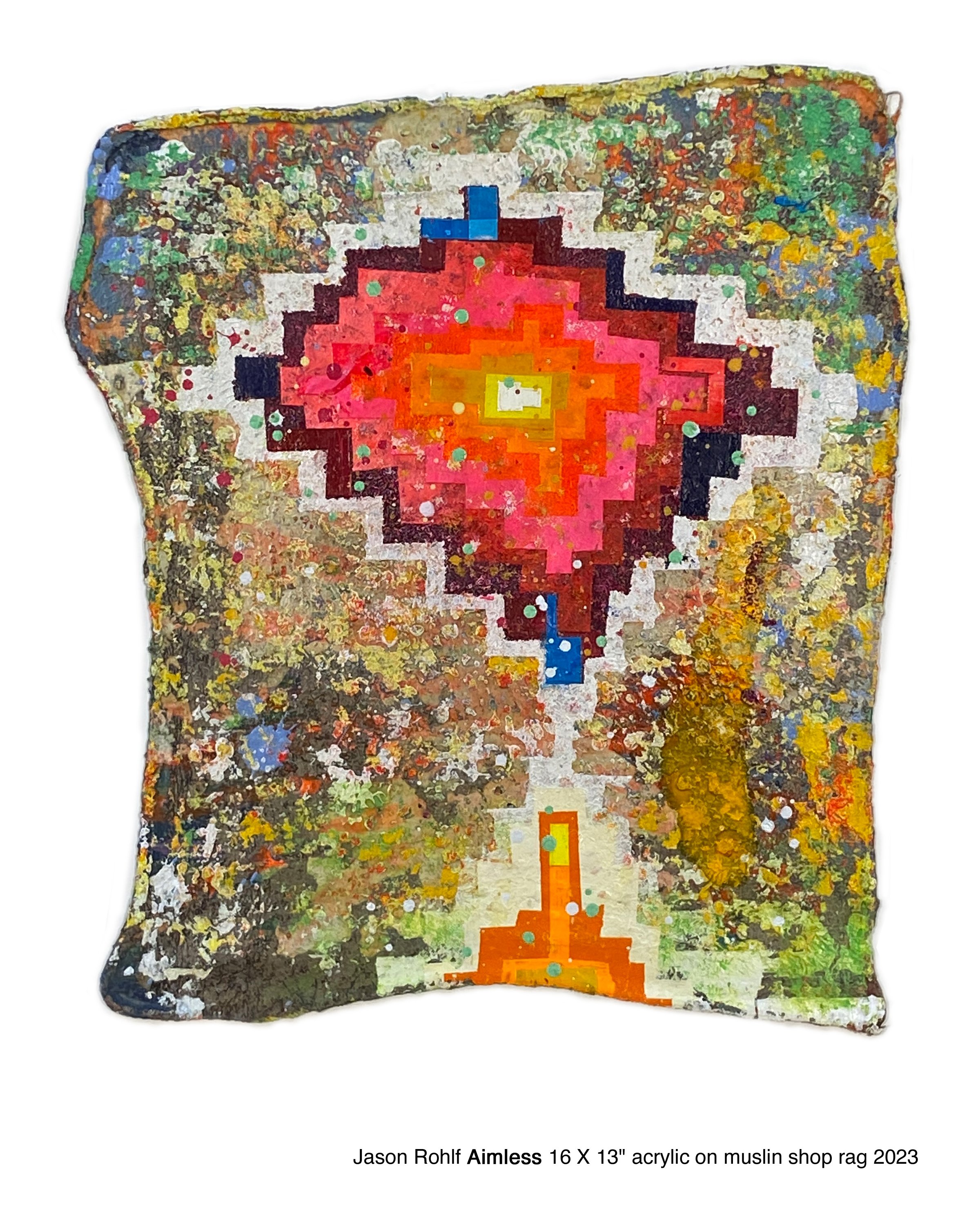
By transforming the stained, worn rags used to clean brushes into primary canvases, Rohlf allows the tool—the silent, laboring “understudy”—to become the authored “thing” itself.
The rags are handworn by process, their textures and accidental stains already a record of studio labor. When Rohlf adds his layers of geometric drawing and paint, he collaborates with this history, entering a dialogue where the tool’s past pushes through the surface. This act blurs the line between muse and artist, process and product. The artwork is, literally, the thing made on the way to making other art.
Elevating this humble, absorptive object to a finished, vibrant painting complicates labels of utility and art.